Visual Rhetoric's Depth of Field
Throughout this project, we approach “visual rhetoric” as encompassing all those elements. We also argue for a major shift in how rhetoricians think, write, and teach about vision and rhetoric.
Visual rhetoric is a vibrant area of research because it offers and demands such a wide variety of approaches to what rhetoric is and how it functions. There is much that we can do when we set about studying what the visual does with us. And over the last several decades, rhetoricians have generated a capacious archive of objects and concepts for visual rhetoric—a wide-ranging catalog for the effects and affects of the visual which has established that the visual is, indeed, rhetorical; shown the importance of that rhetoricity; and provided robust means of engaging with particular aspects of the visual.
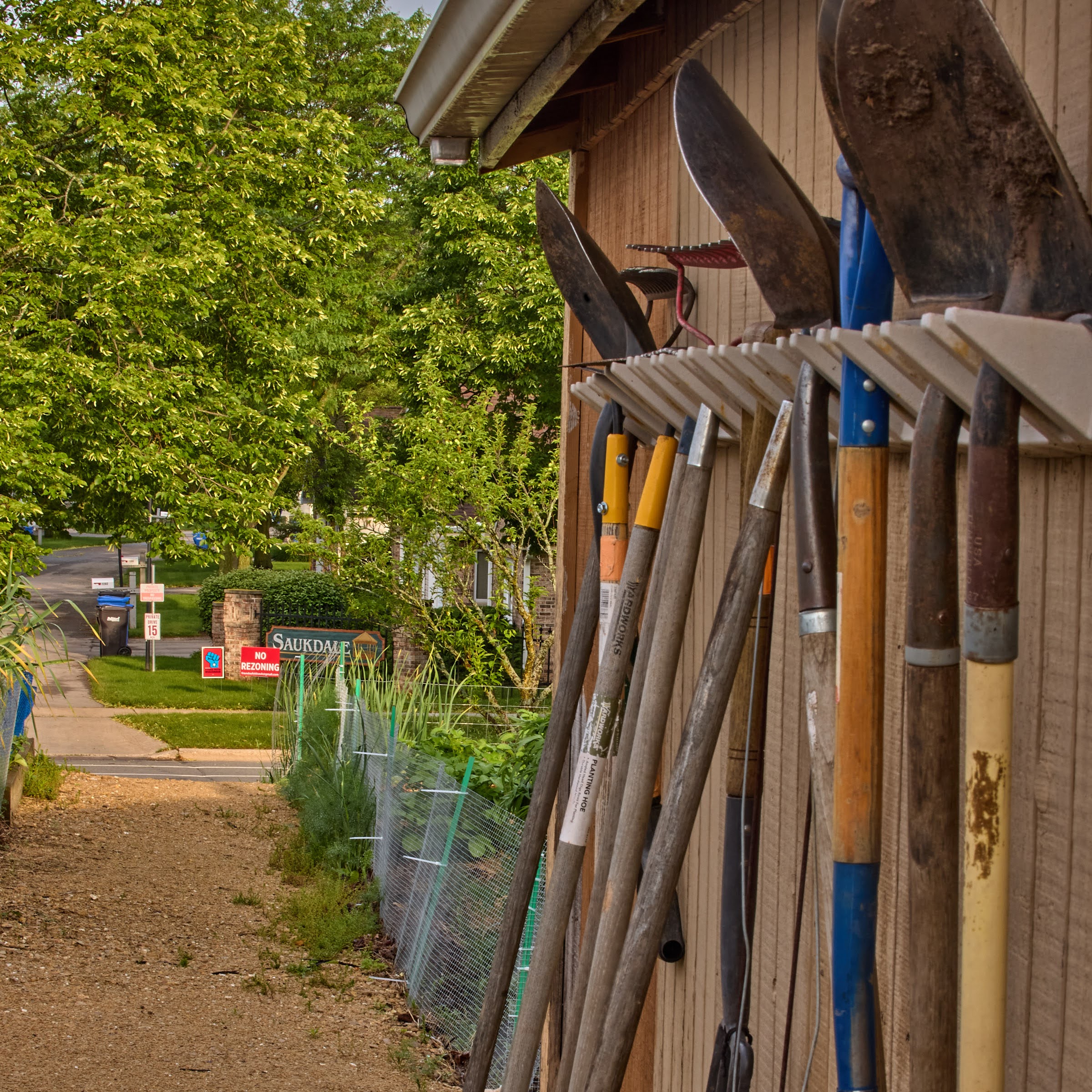
For the most part, visual rhetoric—as a scholarly field—has been constituted by the case study. Encountering the great variety of the visual, scholars have illuminated it by turning our attention to particular historical moments, particular technologies, and particular kinds of images and visual objects. This approach has resulted in a broad array of rhetorical concepts and approaches for engaging the visual and many “rich rhetorical histories” that model what happens when rhetoricians take account of the visual.6 We might think about the visual rhetoric case study as a particular choice about scholarly depth of field, perhaps like the one used in the second of our three opening images. Its relatively wide aperture and fast shutter speed—and the resulting narrow depth of field—draws sharp attention to a bounded area in order to help viewers grasp the scene and its importance.
Making wide use of the case study’s depth of field, visual rhetoric scholars have been less interested in elaborating relationships among the concepts and histories treated in those case studies or in elaborating overarching arguments about the shape or force of visual rhetoric (two other possible scholarly depths of field). In their foreword to a 2009 special issue of enculturation focused on image events, Kevin M. DeLuca and Joe Wilferth noted, “Although contemporary criticism reflects a certain agility with a variety of different visual artifacts … systematic rhetorical accounts of images are few.”7 They sought an approach to images that recognized their “ontological status” and avoided taming images with words—whether those words came in the form of concepts drawn from textual analysis or lent meaning through context. While we share DeLuca and Wilferth’s interest in systemic accounts, we are less faithful to images and their distinctions from texts and contexts. We are also less concerned with ontology and more concerned with relations and tools. We seek, in a phrase, not a “systemic rhetorical account of images” but a heuristic for engaging the rhetorical functions of the visual in their full range.
As hinted at above, we find it helpful to introduce our heuristic purpose using the photographic concept of depth of field. Taken literally, depth of field names the amount of a photograph that is in focus, and it is measured in terms of the distance between the closest and the farthest objects that are in focus. Photographers and filmmakers use depth of field to direct attention and to create a sense of three-dimensionality. “Portrait mode” on an iPhone relies heavily on depth of field manipulations to make faces pop out of their surroundings, and many a bland amateur landscape photograph suffers from excessively wide depth of field that gives every object equal weight.
To compose this introduction, we asked Kathleen Henning, a local photographer, to take pictures in which she relied only on depth of field to highlight different elements of a scene. The trio of photographs below were among the results. Photo #2 has a shallow depth of field, leaving only the garden tools in focus. Photos #1 and #3 have significant depth of field, keeping nearly everything—near or far—in focus. There is a whole range of choices in between, with varying benefits and disadvantages to each choice and different sacrifices required to achieve any particular depth of field.
Figure 3. Coneflowers photographs at different depths of field, 2024. Untitled Coneflower Series. Photograph. Kathleen Henning.
There is no single correct choice for depth of field. The photographer’s purpose, equipment, and the larger environment all come into play when selecting aperture size—the primary determiner of depth of field in a photograph. In addition, photographers do not typically rely solely on choices about depth of field to craft their pictures (e.g. Henning described our charge as “a good exercise” but noted its artificiality). At the same time, a mismatch between purpose and depth of field can quickly lead to an unsuccessful picture. Most importantly, no photographer can fulfill all possible purposes while using one depth of field. Different situations call for different foci.
Our heuristic for tracking the rhetorical functions of the visual is, essentially, a resource for making decisions about scholarly depth of field. It identifies the underlying factors driving rhetoricians’ analytical choices when engaging visual objects or processes, and it illuminates the structures that make particular choices of focus and theory work. It draws attention not only to what is in sharp focus but also to the shaping effects of that which is blurred or receding from focus. It also encourages rhetoricians to consider those choices in light of a larger range of possible choices, recognizing that each selection inevitably brings some things into sharper focus while obscuring others.
In effect, the digital book before you provides a tool for adding additional depths of field to our scholarly toolboxes and for understanding what different aperture settings reveal and obscure about the objects we study. In the photographs above and below, Henning has repeatedly captured purple coneflowers growing in a local prairie. Her choice of depth of field in each case—when combined with other technical choices—enable her to set individual flowers in evocative—but differing—context, crafting very different pictures in the process. She could have chosen a different aperture size in each case—and what viewers noticed about the scene would change as a result. Looking at each individual picture allows viewers to notice a particular set of information about the flowers. Looking at the pictures alongside one another, as representative of the choices made, attunes viewers not only to the images themselves but also tho their relations as well as the affordances and constraints of the choices at work within them. We hope that this project’s heuristics are like that—offering means of calibrating rhetorical studies’ analytical capacities to engage the full depth of ways the visual and the rhetorical intersect. Though each chapter, on its own, may initially feel like a typical visual rhetoric case study with a theory and an example, we invite reader-viewers to approach them as demonstrations that call attention to how different analytical orientation play out in practice.
Our first task in that heuristic project will be to introduce a replacement term for "visual rhetoric," one that highlights the choices rhetoricians make when orienting toward rhetoric and the visual. We ask you to shift focus from “visual rhetoric” to investigating “rhetorical functions of the visual.” Having made the case for that change, we then elaborate means for selecting scholarly depth of field when approaching the rhetorical functions of the visual: identifying the sort of visual functions being examined and recognizing how those functions shape the available theories, objects, contexts, and arguments. In developing this depth-of-field resource, we build on related work done by Cara Finnegan in multiple field-defining review essays,8 and by Lester C. Olson, Finnegan, and Diane S. Hope’s Visual Rhetoric.9 Vivian offers two divisions for the work of visual rhetoric, "representative" and "non-representative" or "virtual." Olson et. al., for their part, posit a framework of five “rhetorical actions” that highlight different aspects of visual rhetoricity. We, in turn, provide a heuristic elaborating six rhetorical functions of the visual which can (and must) be expanded by future scholars and which will allow students and scholars of the visual to draw connections among contexts, objects, and modes, noticing the consequences of those connections.
Our own experience in developing this heuristic is that it quickly showed us surprising patterns in what visual rhetoricians have undertaken to date. Those patterns both revealed nodal points of significant social energy (Ralph Cintron would call them commonplaces10) and drew our attention to sites of omission, where the visual went but visual rhetoric scholarship typically did not. In this book, then, we also review our scholarly area’s own depth of field: surveying where visual rhetoric scholarship has focused, trying out other possible foci, and generating tools to enable future perspectives.